Showing posts with label play. Show all posts

Wednesday, 9 January 2013

Now is the time to plan for 2013


January 2013 and all the world has made (and already broken) resolutions, as well as making plans for the year.  Why should professional nannies be any exception?

1. Buy a large Page a Day Diary and use it to:
  • mark all the family birthdays, with ages for the children.  (You can't make cards for Mummy's birthday if you don't know when it is!)
  • mark any special occasions the family always celebrates
  • record all school/preschool holidays and public holidays
  • record any known appointments the children have
Keep this up to date, adding appointments, pick up times, play dates etc.

Parents can also use the diary to give feedback on the work you are doing.

2. Divide each page so there is a section for each child
  • use these sections each week to plan the activities for each child, what you hope to achieve, and how each child reacts.
  • make your diary available to the parents so they can see what you are doing with their children and how their children are developing.
While this may seem over the top, it it will stop you getting into a rut of doing the same things every day, or every week...they are familiar, the children enjoy them, they don't take much preparation or thought.  To keep yourself feeling fresh, to stop the children being bored and to extend their interests, skills and abilities variety is important.  So while drawing might be a frequent activity, vary it: subjects or free drawing, with different coloured and textured paper, different crayons, pens, pencils, chalks to draw outside etc.

Most modern early educators will follow the children's interests in preparing activities rather than working by topics eg the seasons, colours, weather etc, but using the children's interests does not do away with the need to plan appropriate activities.  Nor does it stop us from pointing out things that might interest children.  Pointing out a fluffy white cloud might interest one child, and lead to lots of learning opportunities while to another it might be 'ho hum, so what? Look at that car!'  Flexibility and different activities for different children of different ages and stages of development!

3. Develop your resource kits. Nannies who have been working for a number of years should have an excellent range of art and craft activities, play ideas for indoors and out, songs and games, books and internet resources.  How do you keep all this excellent information in a way that you can easily access it?
Possible ways include by:
  • age range eg babies, toddlers, pre-schoolers and school aged
  • type of activity eg craft (you might want to break this up into subdivisions like pasting, wool crafts, egg carton crafts etc), art, songs, stories, outdoor games, indoor games
  • topics eg seasons, Christmas, nature (you might want to break this down eg trees, flowers, snails, caterpillars, butterflies), outings
It is also useful to cross reference your resources, or use colour coding eg mark crafts by colours for different ages.
It is also helpful to put comments after you have used different resources about how difficult you and the children found them and any ways you adapted them.

Links:
Early Years Learning Framework can be downloaded from this site.

Childhood101 Playopedia

Nurture Store is an excellent British resource including a weekly play planner.

Let the Children Play is an Australian site with many great ideas as well as being a great promoter of play and playfulness.

Enchanted Learning has a marvellous range of ideas on all sorts of subjects.

Sun Hats and Wellie Boots as the name suggests , is also British with many original ideas.


Those who need help with how to plan might find inspiration from Planning with Kids

Keep watching our Facebook page for ideas from many different Australian and overseas resources.


Monday, 8 October 2012

Adults in children's play

In  a previous post  I spoke of the importance of play as a means for children to learn about their world, about relationships and about values.

But do you play with children, or supervise children while they play?

What is the difference?

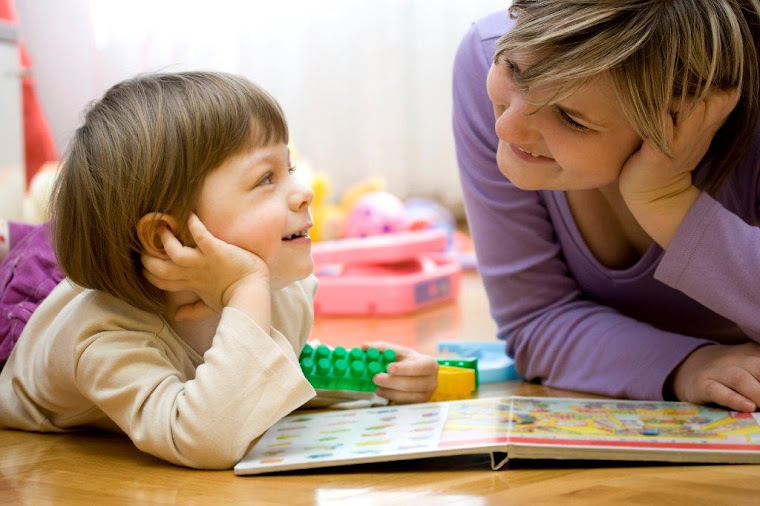
Playing with children means entering their world, engaging with them as they play, as a companion and fellow playmate.

Supervising children as they play means staying on the outer, observing and intervening when necessary so that participants have turns, resources are shared and safety is ensured.

I often hear parents say that their children have lots of toys but they rarely play with them.

There might be a number of reasons for this.

The toys:
  • may not be appropriate for their age
  • may require two or more participants to be used meaningfully
  • may take too much time and effort to be put together to be played with.
The children:
  •  may not have learnt how to play, to relax and use their levels of skill and imagination for pleasure
  • may need adult attention and interaction to guide them.
 On the other hand, perhaps parents, nannies and carers can expect too much of children, expecting them to play quietly and independently for long periods, which some times can be rephrased as 'keeping themselves occupied'.

Some children are much better at independent play than others, and will lose themselves either alone or with a companion, in their own world of imagination or role play, with cars or blocks or dolls' houses, in the sand pit, in their bedrooms or all over the lounge.  These children do not need adult involvement in their play, but simply supervision if the play suddenly becomes rough, or unfair, often signs that it has lost its appeal.  And of course, adults may need to remind the participants about tidying up afterwards.  After the play period, it can be useful to ask the child(ren) about the activity and to talk about how they played and what they might want to do next time, as well as an appreciative comment on the way that they played eg thoughtfully, imaginatively, quietly or whatever is appropriate.

Other children are more sociable and like to engage another person, child or adult, in their play.  For these children in particular, it is necessary for adults to learn how to participate, engaging in both the play and also ensuring that turns are taken, resources are shared and all are kept safe.  This is a case of simultaneously acting like a child and an adult, and is a valuable skill to learn.


In this type of play, as a participant the adult can often draw out from the child(ren) responses that will increase the learning value of the play: counting the number of pieces, commenting on their colours, sizes and shapes, but not to the detriment of the child(ren) having fun.  Again at the end of the play period, it is useful to make appreciative comments on the way they played.

Some facts for adults to learn about play include:
  • Play with out some mess and untidiness not real play. Tidy up before starting a new activity.
  • Children only have relatively short attention spans.  Watch for signs of restlessness and move on to another activity.
  • Play is a preparation for life.  The child does not always have to win, nor does the biggest always have to get his or her own way.
  • Play has to be fun and enjoyable.  If it's not fun, it's not play.
We often post play activities, and links to websites with play as their focus on our Facebook page.  Follow these links and you will be enriched in your play with children, and your supervision of children's play.


Monday, 2 July 2012

Nannies - they just play with kids!

I have often heard people say that nannies don't really work, they just play with kids.  A double put down, both of nannies and of the importance of play.

In earlier posts, I have made clear my view that good, professional nannies work hard.  Their role is diverse as they care for children, guide their development and behaviour, keep them 'fed and watered' and give them emotional security in the absence of their parents.

Today though, I want to look at the other area: 'play'.

The Oxford Dictionary Online defines the verb to play as to 'engage in activity for enjoyment or recreation rather than a serious or practical purpose.'  As early childhood workers though, we know that for children, play is far more than this.  As Jean Piaget said, 'Play is the work of childhood.'

It is through play that children learn. This is recognised as by the central importance of play in the Early Years Learning Framework.

A baby is playing with a rattle in her highchair drops the rattle and learns:
  • about her physical world: gravity, spatial awareness (up and down), sound.
  • about her social world: consequences (frustration with no toy), relationships when someone picks up the toy, fun (when dropping the rattle becomes a game with the person picking it up)
An infant is painting a picture.  His red paint line goes over the blue one and a different colour is seen. He learns the outcome of mixing pigments.

A child is balancing on a log with a parent's steadying hand and lets go.  She teeters but maintains balance, learning the use of muscles, eyes and vestibular organ while doing so.  Edges along the log, nearly slips but is steadied by the parent....still learning all the skills required for balance, learning again the reassurance of a parent's presence and the joy of being able to do things herself.

One big boy and one little girl on a see-saw...learn informally about forces and physics without knowing, as they do when they learn to 'work' the swing by themselves.

During these early years, play is the means of learning about themselves and their physical and social environments.  It is for this reason that children need a range of play experiences.  Just as we give babies toys with different textures and colours, so we need to give children indoor and outdoor experiences, alone and with others, with a range of substances and with some freedom to use materials unconventionally and creatively.    Experiences need to grow with the child so that they gradually learn more complex skills and face new challenges. Thus the body and mind are prepared for later more formal learning activities, and more organised play.

Play, however, does not end with childhood, but it does change form and starts to align more with the Oxford Dictionary definition.  Adult play is often in the form of hobbies, catching up with friends, outdoor activities like jogging, cycling, camping and bushwalking, although I hesitate to include sporting activities that are more competitive in nature.

Playfulness too, is the source of much fun and creativity.  The art of Mirka Mora and Michael Leunig demonstrate this combination.  Word plays and humour, particularly that which reflects joyfully on the quirks of human nature rather than that with a more political intent are also examples of playfulness.  And who does not enjoy a gathering of friends and family overflowing with love and good humour.

The 'Eight Hour Movement' of the Nineteenth Century was about what is now known as work-life balance: eight hours work, eight hours rest and eight  hours recreation.  That is still a good rule!

So yes, nannies do play with children, but in that process are preparing them for life.

For those looking to further explore play, there are many excellent websites relating to children.
Among others I would suggest;
Let the Children Play
Free Range Kids
Childhood 101
DEEWR Early Years Framework
Australian Children's Education and Care Quality Authority