A couple of weeks on holiday and a death in the family, and I have had time to muse about how the memory and the legacy of memories we leave.
The division of memory into short term and long term is commonly accepted, and these days as one approaches 'a certain age' one can become very sensitive to lapses in short term memory, forgetting someone's name; going into a room to fetch something and forgetting what you wanted...the fear of Alzheimer's and related disease is very real. Our long term memory also tends to fade so memories of our childhood recede, though often when reminiscing with contemporaries or looking at photos, we find we are able to access images and scenes we thought were long gone.
Smell is a sense strongly linked with memory, and especially with those that carry strong emotions. Remember the smell of the air after rain on a hot day, the aromas of coffee and baking bread that estate agents once used to make buyers more susceptible to a house's charms, Dad's aftershave, Grandma's scent.
There are also memories of physical skills that become so entrenched that we can perform them automatically without consciously recalling each part of the process. Riding a bicycle is a common example of this, as is driving a manual car without 'bunny hopping'.
As parents, grandparents, nannies, child care professionals we are
responsible for moulding the character and behaviours of the children we
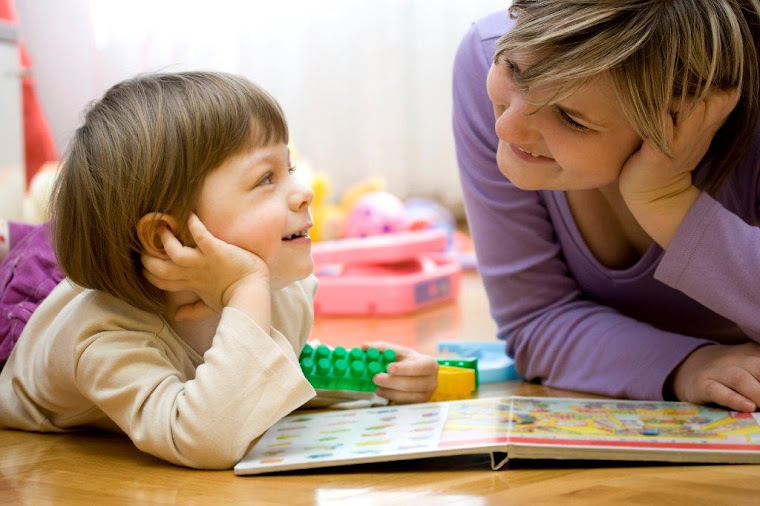
have in our care, both by our actions and by the role modelling we do. It is amazing to nurse a new born baby and then to watch as that baby grows and develops, both creating memories for us and itself accumulating its own store of memories.
We all know it is no use encouraging children to be kind to other
people and in their presence being unkind to someone. Or having a 'no
swearing' policy and then abusing the motorist that cuts us off. In
both these instances, it is not unusual to have a child point out our
inconsistency!
When someone dies, many memories are stimulated as people reflect on the person who has died. This happens even with miscarriages and perinatal births, as once a child is conceived we have a variety of reactions, hopes and fears which centre on the child and the circumstances of its conception and death. As I have previously written, the death of a child is generally traumatic for all concerned, but all deaths, even peacefully in old age, have an impact on those who have known the person, hence the period of grieving that lingers far beyond the funeral.
I think most of us would want to be remembered as people who are kind,
generous, loving, and any of the other attributes we value. If we
achieve great things with our lives for example as scientists,
humanitarians, sporting figures we would want these to be remembered.
If our achievements are somewhat more measured we would want to be
remembered as people of integrity, living as well as we can.
In Julius Caesar, Shakespeare tells us that "The evil that men do lives after them; The good is oft interred with their bones". It is terrible to think that this is true of our everyday lives, that all the little things we have done wrong are the things that people remember most about us. I think rather that these misdoings are quite different from those of men like Hitler, Pol Pot, Stalin and Idi Amin.
I read a line in a novel, the title long since forgotten, that lovely old people don't get that way overnight but as the product of their life long way of living. If that is so, how we are remembered has already started, and the result is in our hands.
Showing posts with label death. Show all posts
Monday, 5 November 2012
Sunday, 24 June 2012
The death of a child
Friday 29th June is Red Nose Day, when we are encouraged to make fools of ourselves for a serious cause. For those of you who don't know, that cause is SIDS (Sudden Infant Death Syndrome), now expanded to include other childhood deaths, as SIDS and Kids.
It seems ages since the day started and when checking, found this year marks the 25th year. In that time, the SIDS and Kids Foundation has
A less tangible benefit of the SIDS and Kids work is that there has been an increased awareness of death in childhood in the community.
As I mentioned in an earlier post, this is probably the greatest fear of any parent. The death of a child is shocking. The funeral of a child is overwhelmingly sad. The absence of a child from the intimate family and friend network is an appalling gap.
There is nothing to say that doesn't sound trite or clichéd. There are limits to the number of casseroles and cakes that a family can eat.
So what can you do?
And in the next few days, if you see a stall for SIDS and Kids, or are approached to buy a red nose or other merchandise, give generously.
It seems ages since the day started and when checking, found this year marks the 25th year. In that time, the SIDS and Kids Foundation has
- raised awareness of SIDS,
- funded extensive research leading to an intensive community and professional education program which has resulted in the marked reduction of SIDS in Australia,
- created a 24/7 National Bereavement Support Line (1300 308 307).
A less tangible benefit of the SIDS and Kids work is that there has been an increased awareness of death in childhood in the community.
As I mentioned in an earlier post, this is probably the greatest fear of any parent. The death of a child is shocking. The funeral of a child is overwhelmingly sad. The absence of a child from the intimate family and friend network is an appalling gap.
There is nothing to say that doesn't sound trite or clichéd. There are limits to the number of casseroles and cakes that a family can eat.
So what can you do?
- Be there, in person and by phone but only for brief calls. Don't avoid the family just because you feel unable to cope: it's ok to say that you don't know what to say. Don't feel you have to be bright and cheerful, just sit quietly and listen. Don't presume to know how someone is feeling: ask. People need space as well as company.
- Mention the child's name when talking. Share any memories you have and ask for the parent's memories. Take copies of any photos you might have. Don't be afraid of tears, and don't disapprove of laughter about happy times.
- Continue to ask the family to social events that you would have invited them to prior to the child's death, suggesting that they need only stay as long as they can manage.
- Remember that any children in the family are also grieving and experiencing a tremendous dislocation. Don't forget to talk to them too, about their brother or sister. Don't smother them with attention/affection, but don't ignore them or think they are too small to notice the change. Even very young babies are sensitive to changes in atmosphere.
- Ask if you can bring a rose, rosemary or some other plant for the family's garden to remember the child, or make a donation in memory of the child to a children's charity.
- Avoid the unhelpful, false hope of comments like 'time heals', 'you'll soon feel better', 'keep busy'. Everyone copes in their own way.
- Many families attend annual memorial services on Red Nose Day, and you can join them to commemorate the children who have died.
And in the next few days, if you see a stall for SIDS and Kids, or are approached to buy a red nose or other merchandise, give generously.
Monday, 9 April 2012
A subject we tend to avoid...
Whether we like it or not, death is very much part of life. Nothing is more certain. The only thing we don't know for sure, is when.
Death of young people is especially heartbreaking. In recent times we have followed the course of Jim Stynes' s illness and death and the outporing of emotion that marked his funeral. On a more personal level, my 32 year old nephew died unexpectedly. With such premature deaths, we mourn them both for their lives and for the life that they haven't yet lived. What might have been.
And parents in particular, find the death of their children something they never want to face. It is the wrong order of theings. And I have heard grandparents say "It should have been me, my life is nearly over anyway." And when a baby or young child dies, no one knows what to say, the grief is raw and affects everyone.
It is hard enough for us to deal with death, especially the death of someone close, without having to explain death to children. Perhaps it was easier in the days when religious belief was widespread, when child mortality was high and people died at home rather than in hospital, but now in the absence of these things we can be left struggling for words.There are now excellent resources to help with the task, and perhaps some of the best advice is to use the non-emotional times to start raising the issues with children eg a dead flower, leaves falling off trees, a dead bird found on a walk.
An on line pamphlet I found particularly helpful is http://www.hospicenet.org/html/talking.html
There is however, no easy answer to this complex issue, because we all bring our own experiences, feelings and attitudes, but we shouldn't ignore it.
Death of young people is especially heartbreaking. In recent times we have followed the course of Jim Stynes' s illness and death and the outporing of emotion that marked his funeral. On a more personal level, my 32 year old nephew died unexpectedly. With such premature deaths, we mourn them both for their lives and for the life that they haven't yet lived. What might have been.
And parents in particular, find the death of their children something they never want to face. It is the wrong order of theings. And I have heard grandparents say "It should have been me, my life is nearly over anyway." And when a baby or young child dies, no one knows what to say, the grief is raw and affects everyone.
It is hard enough for us to deal with death, especially the death of someone close, without having to explain death to children. Perhaps it was easier in the days when religious belief was widespread, when child mortality was high and people died at home rather than in hospital, but now in the absence of these things we can be left struggling for words.There are now excellent resources to help with the task, and perhaps some of the best advice is to use the non-emotional times to start raising the issues with children eg a dead flower, leaves falling off trees, a dead bird found on a walk.
An on line pamphlet I found particularly helpful is http://www.hospicenet.org/html/talking.html
There is however, no easy answer to this complex issue, because we all bring our own experiences, feelings and attitudes, but we shouldn't ignore it.
Subscribe to:
Posts (Atom)